
Home / Products / Kitchen & Dining

FOR EVERYDAY PREPARING, SERVING & SHARING

Kitchen & Dining

Kitchen accessories, tableware, dining essentials, and small kitchen items.

Inquire About This Category
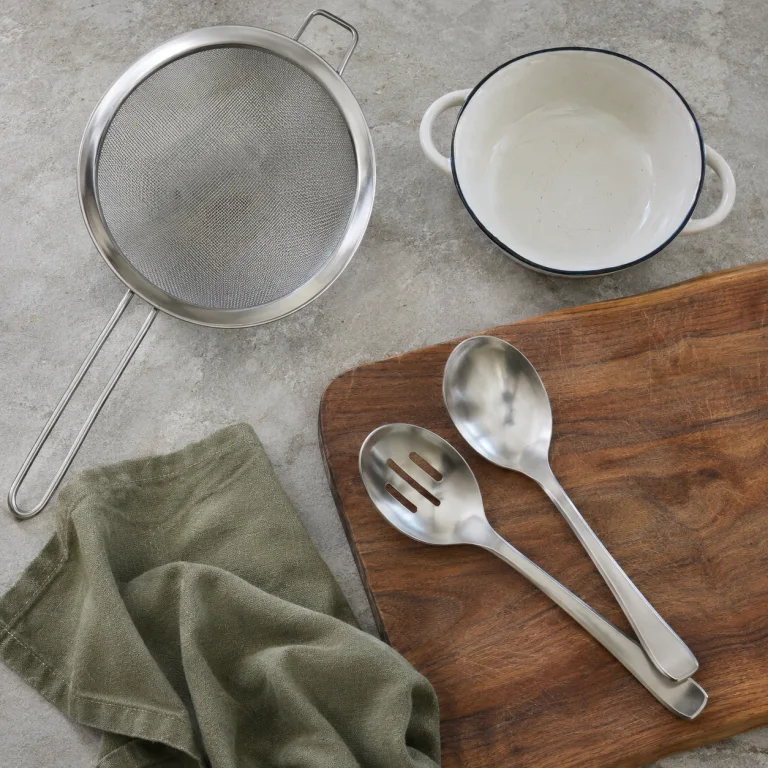
Illustrative overhead kitchen scene with a strainer, enamel bowl, steel utensils and a tea towel

A CLOSER LOOK AT KITCHEN & DINING

An assortment for the kitchen and table.

A kitchen assortment follows the rhythm of a meal: preparing ingredients, bringing food to the table, and putting everyday pieces back in place. For retailers, these connected moments offer a useful way to organize a department. Kitchen and dining buying starts with familiar household routines, then considers how individual items fit the space, occasion, and visual character of a home.

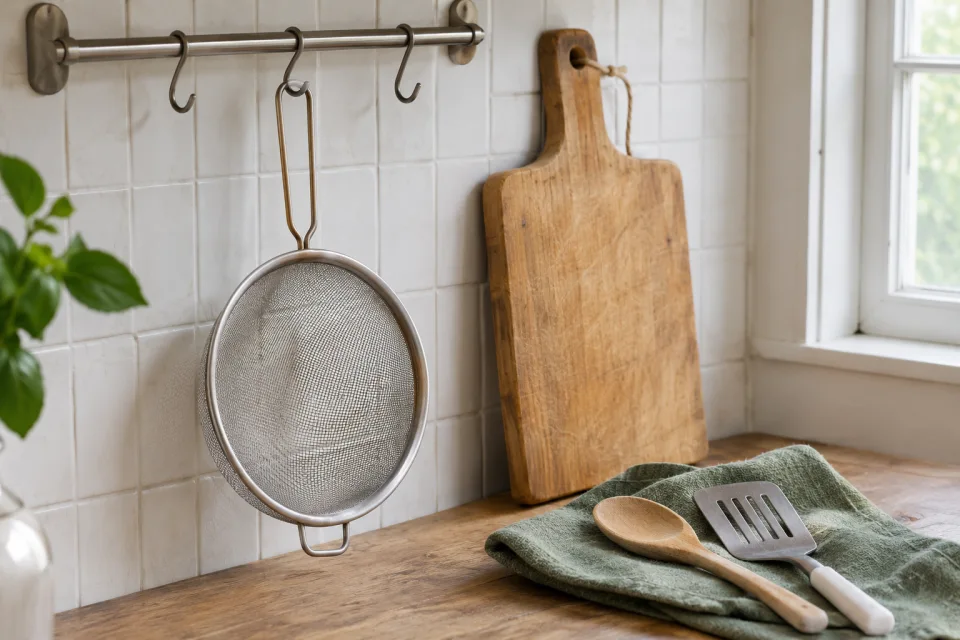
Illustrative kitchen countertop with utensils and a strainer

01 / Kitchen & Dining

Start at the preparation counter

Meal preparation brings several small tasks into a limited area. Utensils need a place beside the work surface, while a strainer belongs within reach when ingredients move between the sink and counter. A thoughtful kitchen display can show these relationships without crowding the scene or suggesting that every household needs an identical collection.

A preparation assortment works best when its roles are easy to follow. Utensils belong to the active part of cooking, while holders give those tools a resting place between tasks. Grouping by activity lets retailers create a practical sequence, from rinsing ingredients to preparing a work surface and reaching for the next tool.
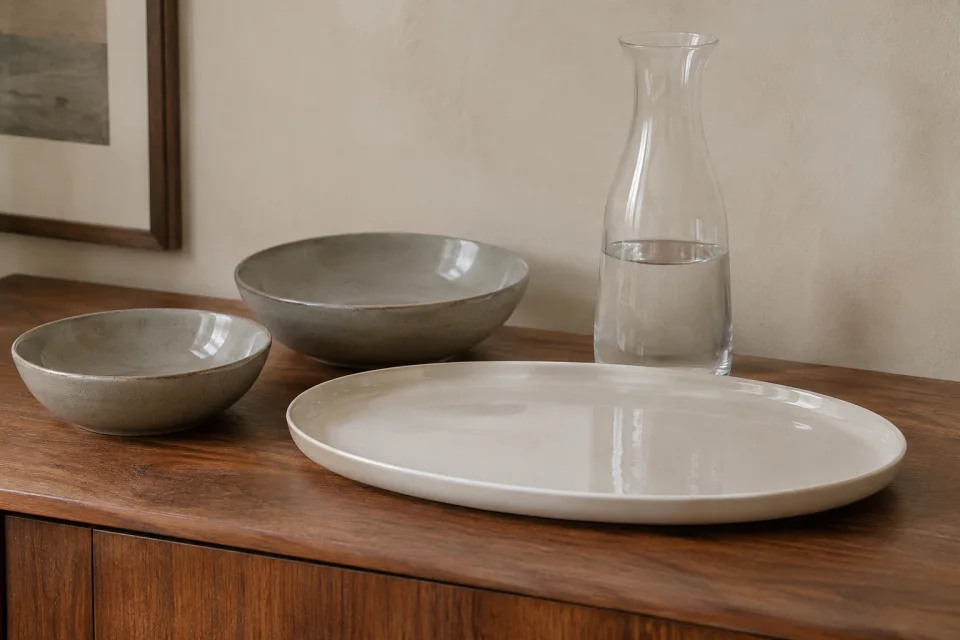
Illustrative sideboard arranged with serving bowls and a platter

02 / Kitchen & Dining

Make room for serving

Serving pieces bridge the working kitchen and the dining area. A bowl placed on a sideboard can suggest a relaxed family meal, while a platter gives a gathering a different focal point. The surrounding space matters: room for hands, neighboring dishes, and the route from the kitchen all influence the arrangement.

In a store, a serving vignette can sit alongside tableware while retaining its own category identity. A broad central platter creates a different composition from several smaller bowls arranged together. Buyers can build a serving story around a relaxed supper, a shared weekend meal, or a sideboard prepared for guests to gather nearby.

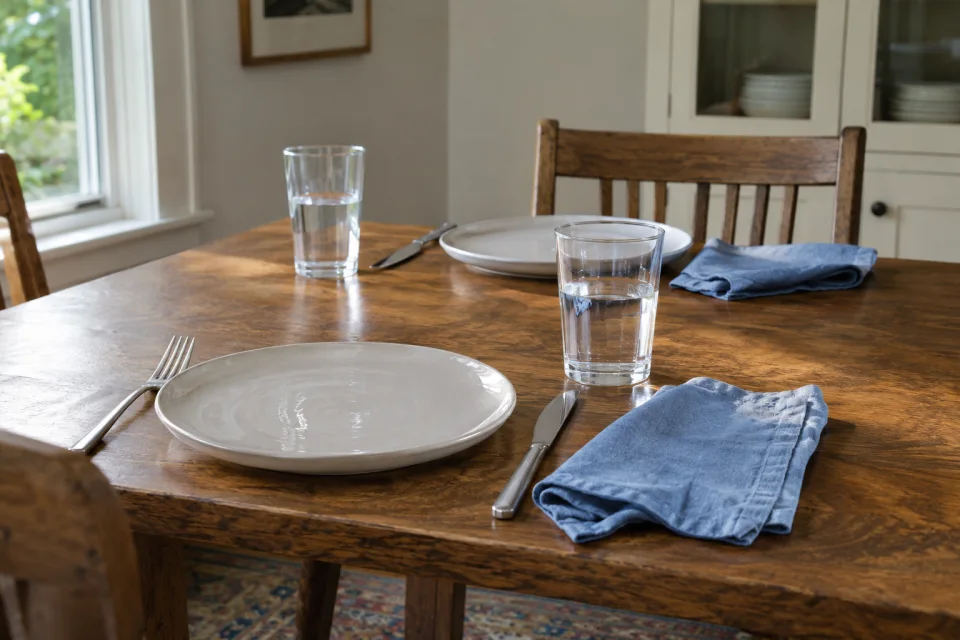
Illustrative everyday dining table with glasses and plates

03 / Kitchen & Dining

Build an everyday table story

An everyday table feels approachable when its parts leave room for the meal itself. Plates, glasses, and a few serving pieces can establish a setting without elaborate decoration. Repeating a restrained palette creates a visual connection, while variation in the arrangement keeps the scene from feeling like a rigid showroom display.

Retailers can carry this approach into a dining department by building from a simple place setting. A neighboring arrangement can introduce more serving pieces for a gathering. The relationship between the two scenes gives customers a way to imagine extending their everyday table, while keeping the overall collection visually connected and easy to browse.

Illustrative category scenes. Ask our team to confirm actual product details, specifications and availability.

YOUR NEXT ASSORTMENT

Kitchen & Dining Product Information

Home essentials for retailers, boutiques, and online sellers. Tell us what your business needs.

Let’s discuss your product needs

Contact our team for current product information and wholesale options, or try another search.

Submit Product Inquiry

MAKE YOUR REQUIREMENTS CLEAR

Planning a kitchen & dining assortment?

Newell Import Solution CO sources home and living products from overseas suppliers for U.S. retail businesses. A kitchen and dining inquiry is most useful when it connects the intended retail setting with a clearly defined selection.

Request Category Information
  • Define the occasion

    Identify whether your selection is intended for daily preparation, everyday dining, or hosting, so the assortment has a clear purpose before individual items are reviewed.

  • Separate pieces from sets

    List the pieces you want to evaluate individually, including any interest in coordinated groupings. Note whether your assortment is centered on separate items or sets.

  • Provide a buying outline

    Include your business type, preferred product groups, and estimated quantities. Identify the preparation, serving, or dining activities you want the proposed assortment to address.